Home / Services / Blown-In Insulation
Residential & Commercial
Blown-In Insulation Pensacola
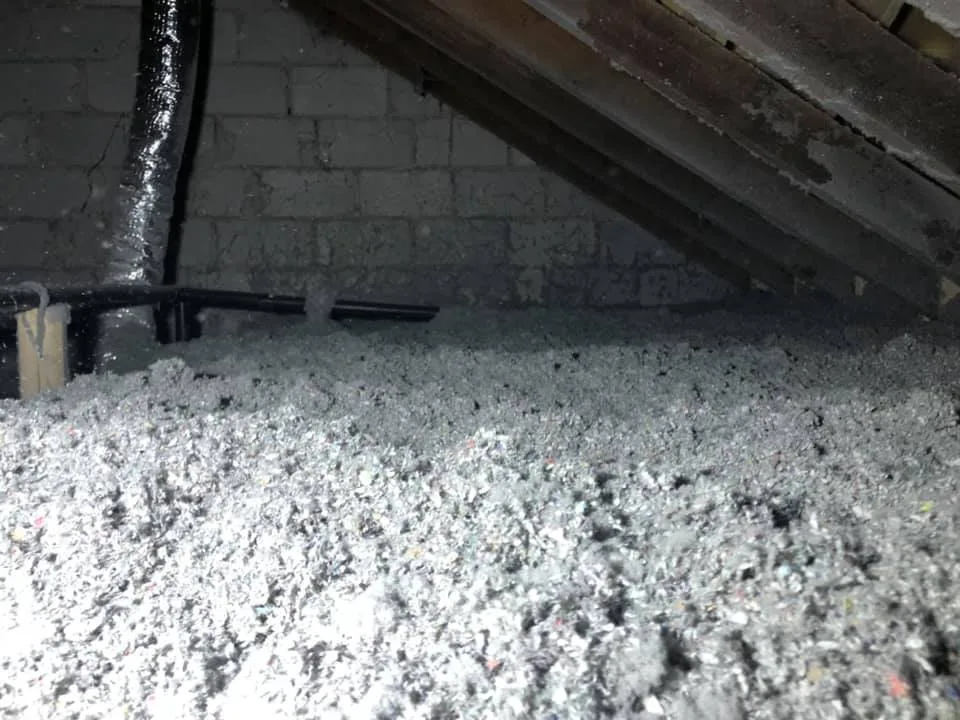
Blown-in is sold by R-value, and R-value only exists at full, uncompressed depth. Most underperforming Gulf Coast attics were simply never filled to the number on the quote.
Cellulose or Blown Fiberglass?
Cellulose is denser, settles into irregular framing and resists air movement better. Blown fiberglass is lighter and adds almost no load to a ceiling. Both sit on the attic floor, which means both depend entirely on the air sealing underneath them. On the Gulf Coast that matters more than the R-value printed on the bag, because the problem here is usually humid air moving through the envelope rather than heat conducting through it.
Depth Is the Product
We measure the existing depth before quoting and measure again at completion, so what you paid for is something you can see rather than something you take on trust. Where the existing material is damp or settled, removal is quoted separately. Call (850) 203-2258.
Questions
Common questions
Is blown-in cheaper than spray foam?
Per square foot, yes. It insulates but does not air seal, so the two are not doing the same job.
Can you add blown-in over what is already in my attic?
Often yes, if the existing material is dry, clean and not compacted. Damp or contaminated material comes out first.
Does blown-in work in Florida humidity?
It insulates, but it does nothing to stop humid air moving through it. In this climate the air sealing underneath is what decides the result.
Want to know what your project would cost?
Tell us about the property and we'll help you determine the next step.
Free written estimates • No obligation • Local team